
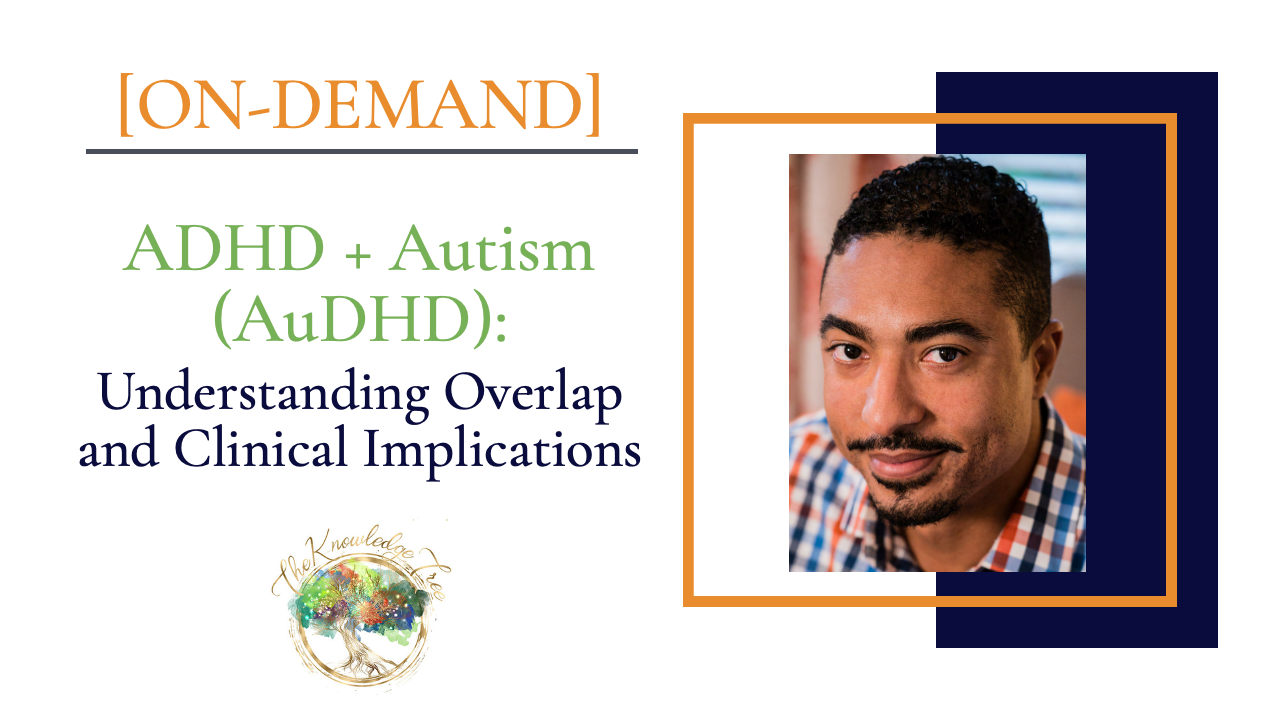
ADHD + Autism (AuDHD): Understanding Overlap and Clinical Implications - 6 hours
To access the discount form for registering for multiple workshops or participants, please click here.
- CE Hours Included: 6 (please see below for details)
- Format: On-Demand Webinar (“Asynchronous”, Non-Interactive) ~ At your leisure this recorded video is to be viewed at your own pace. You may pause, rewind, and fast forward at any point during the videos. You are in complete control of how you view this workshop. It also comes with a PowerPoint and references. There is a quiz at the end to ensure viewing and required by all CE approval organizations.
- NOTE: Your certificate will be dated when you complete the course - Click here for more detailed information on the best way to do this: https://www.theknowledgetree.org/p/help
- Investment: $140 (provides lifetime access!)
- Presented by: Brandon Browne, LPC (see bio below)
- Date of Recording: December 18, 2026
- Instruction Level: Intermediate
- Target Audience: Psychologists, Counselors, Social Workers, Marriage & Family Therapists
- This workshop is not yet available; by pre-registering, you will receive immediate access when it becomes available in January.
Learning Objectives:
After completing this workshop in its entirety, you will be able to:
- Describe the overlapping and distinguishing clinical features of ADHD and autism and how co-occurring characteristics may affect attention, executive functioning, sensory processing, emotional regulation, social communication, and daily functioning.
- Analyze client behaviors and presenting concerns to differentiate potential ADHD-related, autism-related, overlapping, and contextual processes that may influence clinical presentation.
- Organize assessment information across executive functioning, sensory regulation, emotional processing, social communication, environmental demands, strengths, and functional impairment to develop an individualized AuDHD case conceptualization.
- Compare intervention needs associated with ADHD, autism, and co-occurring presentations to select appropriate adaptations in structure, communication, regulation, environmental supports, and treatment delivery.
- Demonstrate therapeutic strategies that address executive functioning, sensory regulation, emotional processing, communication, overwhelm, task initiation, and between-session follow-through in clients with co-occurring ADHD and autistic presentations.
- Apply an integrated AuDHD treatment framework to establish functional treatment targets, monitor real-world outcomes, identify barriers to progress, and modify interventions based on client response, context, and individual needs.
Workshop Description:
What happens when a client’s difficulties with attention, executive functioning, sensory experiences, social communication, emotional regulation, or daily functioning do not fit neatly within a single neurodevelopmental framework? Clinicians working with ADHD and autism may encounter overlapping presentations that complicate assessment, case conceptualization, treatment planning, and interpretation of client behavior. When ADHD and autistic characteristics co-occur—often informally described as “AuDHD”—clinicians need a framework for recognizing both shared and distinguishing features without reducing the individual to a diagnostic label or assuming that every challenge is explained by neurodivergence.
This 6-hour intermediate workshop examines the overlap between ADHD and autism and the clinical implications of co-occurring presentations. Participants will consider similarities and differences across executive functioning, attention and regulation, social communication, sensory experiences, emotional processing, routines, interests, and everyday functioning. The training will examine how overlapping or interacting characteristics can complicate clinical assessment and meaning-making and will provide practical strategies for organizing clinical information, developing individualized case conceptualizations, and adapting interventions to client needs.
Using a neurodiversity-affirming framework, participants will also consider masking, compensatory strategies, contextual demands, strengths, identity, clinician assumptions, and cultural factors that may influence how ADHD and autistic characteristics are recognized and understood. Through clinical examples and applied discussion, attendees will practice moving from symptom identification toward a more integrated understanding of the individual, with the goal of improving assessment, treatment planning, therapeutic communication, and individualized clinical care.
Workshop Agenda:
I. Recognizing AuDHD in Clinical Practice - 60 minutes
Learning Objective 1: Describe the overlapping and distinguishing clinical features of ADHD and autism and how co-occurring characteristics may affect attention, executive functioning, sensory processing, emotional regulation, social communication, and daily functioning.
- Clinical meaning and limitations of the informal term AuDHD
- ADHD and autism as distinct neurodevelopmental presentations that may co-occur
- Core ADHD patterns involving attention regulation, executive functioning, activation, impulsivity, and motivation
- Core autistic patterns involving social communication, sensory processing, predictability, repetitive patterns, and focused interests
- Areas of overlap across executive functioning, emotional regulation, sensory processing, social functioning, and daily living
- Similar observable behaviors that may arise from different ADHD-related and autism-related mechanisms
- AuDHD interaction patterns, including novelty versus predictability and stimulation seeking versus sensory overwhelm
- Masking, compensation, and presentations that may be overlooked or misunderstood
- Variability in presentation across home, work, school, relationships, and therapy
- Functional impact, individual variability, strengths, and challenges associated with co-occurring presentations
II. Differential Assessment and Clinical Interpretation - 60 minutes
Learning Objective 2: Analyze client behaviors and presenting concerns to differentiate potential ADHD-related, autism-related, overlapping, and contextual processes that may influence clinical presentation.
- Why overlapping ADHD and autistic characteristics can complicate clinical assessment
- Moving from observable behavior to identification of the underlying clinical process
- Differentiating attentional dysregulation, hyperfocus, disengagement, overload, and competing explanations for attention difficulties
- Differentiating ADHD-related social difficulties from autistic social-communication differences
- Understanding executive dysfunction, avoidance, rigidity, anxiety, overwhelm, and lack of clarity as competing explanations for task difficulties
- Identifying emotional dysregulation, processing differences, triggers, escalation patterns, and recovery needs
- Distinguishing sensory dysregulation from behavioral resistance, avoidance, or lack of motivation
- Understanding impulsivity, rigidity, novelty seeking, predictability needs, and apparently contradictory presentations
- Evaluating masking, compensatory strategies, developmental history, and variability across environments
- Avoiding common clinical errors, including interpreting neurodevelopmental differences as laziness, defiance, unwillingness, personality pathology, or treatment resistance
III. AuDHD Assessment and Case Conceptualization - 60 minutes
Learning Objective 3: Organize assessment information across executive functioning, sensory regulation, emotional processing, social communication, environmental demands, strengths, and functional impairment to develop an individualized AuDHD case conceptualization.
- Moving from diagnostic symptom lists to individualized clinical formulation
- Identifying the client’s primary functional concerns and treatment-relevant problems
- Assessing attention, executive functioning, initiation, organization, working memory, transitions, and follow-through
- Assessing sensory experiences, environmental triggers, overload, under-stimulation, and recovery needs
- Assessing social communication, interpersonal expectations, relationships, and communication demands
- Assessing emotional awareness, processing, regulation, escalation, shutdown, and recovery
- Assessing predictability needs, flexibility, motivation, interests, and engagement
- Identifying environmental demands, person-environment fit, strengths, interests, supports, and compensatory strategies
- Differentiating neurodevelopmental traits, coping strategies, contextual responses, environmental mismatch, distress, and functional impairment
- Integrating assessment findings into prioritized treatment targets and identifying areas requiring further assessment or referral
IV. AuDHD Treatment Planning and Intervention Selection - 60 minutes
Learning Objective 4: Compare intervention needs associated with ADHD, autism, and co-occurring presentations to select appropriate adaptations in structure, communication, regulation, environmental supports, and treatment delivery.
- Moving from diagnosis-driven treatment to treatment based on functional mechanisms and individual needs
- Comparing common ADHD-related, autism-related, and co-occurring intervention needs
- Determining when to build skills, modify expectations, or accommodate environmental demands
- Selecting executive-function supports for initiation, organization, memory, sequencing, transitions, and follow-through
- Selecting sensory and emotional regulation supports based on patterns of arousal, overload, and recovery
- Adapting therapeutic communication through increased clarity, reduced ambiguity, processing time, and structured information
- Balancing competing needs such as novelty versus predictability and flexibility versus structure
- Adapting CBT, behavioral, mindfulness, emotion-regulation, and skills-based interventions for AuDHD presentations
- Collaboratively establishing treatment priorities based on functional impact, client goals, strengths, preferences, and capacity
- Establishing observable and measurable treatment targets that can be used to evaluate progress
V. Practical Therapeutic Strategies for AuDHD - 60 minutes
Learning Objective 5: Demonstrate therapeutic strategies that address executive functioning, sensory regulation, emotional processing, communication, overwhelm, task initiation, and between-session follow-through in clients with co-occurring ADHD and autistic presentations.
- Increasing therapeutic clarity and reducing unnecessary ambiguity and cognitive load
- Breaking complex therapeutic goals and tasks into concrete, manageable steps
- Externalizing executive-function demands through written plans, visual supports, reminders, checklists, templates, and environmental cues
- Reducing barriers to task initiation by modifying the size, complexity, timing, or activation demands of a task
- Using predictable session structure while maintaining appropriate flexibility
- Identifying sensory barriers to participation and incorporating individualized sensory accommodations
- Supporting emotional identification, communication, and recognition of early signs of dysregulation
- Responding therapeutically to overwhelm, shutdown, escalating activation, and temporary loss of access to previously learned skills
- Adapting homework and between-session expectations to executive-function capacity while treating inconsistent completion as clinical information rather than noncompliance
- Using client strengths, interests, motivation, and existing successful strategies to improve engagement and generalization across settings
VI. Measuring Outcomes, Troubleshooting Treatment, and Integrated Clinical Practice - 60 minutes
Learning Objective 6: Apply an integrated AuDHD treatment framework to establish functional treatment targets, monitor real-world outcomes, identify barriers to progress, and modify interventions based on client response, context, and individual needs.
- Defining successful treatment in terms of meaningful changes in the client’s daily functioning and quality of life
- Establishing baseline functional concerns before implementing interventions
- Monitoring outcomes across executive functioning, emotional regulation, sensory regulation, relationships, participation, and daily living
- Distinguishing symptom reduction from improved functioning, self-understanding, autonomy, and person-environment fit
- Evaluating whether therapeutic interventions are reducing or unintentionally increasing cognitive, sensory, and emotional demands
- Troubleshooting stalled treatment by examining the treatment target, intervention choice, accommodations, expectations, environmental barriers, and possible co-occurring conditions
- Addressing shame, repeated failure experiences, self-criticism, and reduced treatment engagement
- Integrating culture, identity, language, family expectations, socioeconomic resources, environmental context, and access to support into treatment decisions
- Identifying clinician assumptions and avoiding unnecessary expectations for conformity to neurotypical standards
- Integrating the complete clinical process through case application: recognition → differential assessment → formulation → treatment target → intervention → outcome measurement → treatment revision
Presented by: Brandon Browne, LPC

Brandon Browne, MA, LPC, is the Owner and Clinical Director of Mind & Body Christian Health Group in Kennesaw, Georgia. A Licensed Professional Counselor since 2009 and Certified PEERS® for Adolescents Provider, he specializes in ADHD, autism spectrum presentations, trauma, marriage and relational dynamics, and ketamine-assisted psychotherapy, using integrative approaches that address mental and physical health.
Brandon is an experienced workshop presenter and podcast guest known for making complex clinical topics practical and accessible. From 2009–2015, he served in youth and counseling leadership at Eagle’s Landing Christian Counseling and now leads a multidisciplinary healthcare team. He co-authored The Whole Self ADHD Guide: Cultivating Focus, Connection, and Joy with Brittany Browne and authored Mind & Body: Christian Health Group Therapy Guide. His clinical experience with ADHD and autism spectrum presentations, combined with his licensure, specialized training, authorship, leadership, and professional presentation experience, provides a strong foundation for teaching doctoral-level participants about the complexities of overlapping ADHD and autistic presentations and their implications for clinical practice.
In this workshop, Brandon draws upon his clinical experience with ADHD and autism to help clinicians move beyond overly simplified, either/or understandings of neurodevelopmental presentations. Participants will examine overlapping and distinguishing features of ADHD and autism, the ways co-occurring presentations may affect clinical assessment and case conceptualization, and practical strategies for providing individualized, neurodiversity-affirming care.
6 "Asynchronous" CE Hours Included - Details by License Type Below:
- PSYCHOLOGISTS: The Knowledge Tree, A Summit Professional Education Company is approved by the American Psychological Association to sponsor continuing education for psychologists. The Knowledge Tree, A Summit Professional Education Company maintains responsibility for this program and its content. For more detailed information on the current CE ruling in Georgia, or if you are licensed in another state or country, please click here.
- COUNSELORS: The Knowledge Tree, A Summit Professional Education Company has been approved by the National Board for Certified Counselors (NBCC) as an Approved Continuing Education Provider (ACEP), ACEP No. 7153. Programs that do not qualify for NBCC credit are clearly identified. The Knowledge Tree, A Summit Professional Education Company is solely responsible for all aspects of the programs.
- GA: Counselors in GA will receive 6 Core Hours for completing this course. Please click here for more detailed information.
- SOCIAL WORKERS: The Knowledge Tree, a Summit Professional Education
Company, provider #2470, is approved as an ACE provider to offer social work
continuing education by the Association of Social Work Boards (ASWB) Approved
Continuing Education (ACE) program. Regulatory boards are the final authority
on courses accepted for continuing education credit. ACE provider approval
period: 1/14/2026-1/14/2027. Social workers completing this course receive 6 clinical continuing education credits.
- GA: Social Workers in GA will receive 6 Core Hours for completing this course. Please click here for more detailed information.
- MARRIAGE & FAMILY THERAPISTS: TKT has applied for approval for this workshop through the Georgia Association for Marriage & Family Therapy (GAMFT). If you are licensed in another state or country, please click here for more detailed information.
Registration: To register for individual workshops, we recommend purchasing the course directly on the workshop's page on our website. If you would like to register for multiple workshops at once and receive our multi-workshop discount (detailed below), you may either complete the Multi-Workshop Registration Form (available HERE) and email it to our Customer Service Team at theknowledgetree@summit.zendesk.com or call them at 404-913-2005 to register over the phone. Workshops worth fewer than 3 CE hours are not eligible for the multi-workshop discount and are therefore not listed on the registration form. Workshop registration for live webinars is open until the time the workshop begins, unless otherwise specified.
Multi-Workshop Discount: There is a 10% discount when registering for two workshops, a 15% discount when registering for three or four workshops, and a 20% discount when registering for five or more workshops. To receive this discount, you must use the Multi-Workshop Registration Form (available HERE). The discount only applies to courses purchased in the same transaction; the discount cannot be applied to courses purchased directly on our website, and cannot be applied retroactively to courses previously purchased. As stated above, courses worth fewer than 3 CE hours are NOT eligible for the multi-workshop discount and are therefore not listed on the registration form.
Refund/Cancellation Policy: If you can no longer attend a workshop you have registered for, you can either receive a credit for another workshop or receive a refund if you are within the refund policy period. Refunds will be given for cancellations received at least five days prior to the workshop. More information about refund/cancellation can be found here.
Attendance Policy: 100% attendance, completion of a course evaluation and passing a post-test with a score of 70% or higher (you will have 2 retake opportunities) is required at any asynchronous CE program in order to receive credit for that CE program. No partial credit is given. Certificates of completion will be available in each attendee’s account once these completion requirements have been met.
ADA Requests: We will make every effort to accommodate any reasonable ADA request. Please call or email us at least two weeks prior to the event. Payment and registration are required to fulfill an ADA request.
No Conflict Policy: Neither The Knowledge Tree nor its speakers have received any commercial support for this program or its contents and will not receive any commercial support prior to or during this program.
System Requirements: Live Interactive Webinars are facilitated via Zoom. System requirements for the Zoom platform are linked at our FAQ page.
We are an approved vendor for the U.S. Department of Veterans Affairs for easy reimbursement of educational expenses for VA employees.
Get Started!
|
For information about our Continuing Education Workshops, please contact our Customer Service team at: theknowledgetree@summit.zendesk.com |
Sign Up for Our Newsletter
Stay up to date with the latest courses, announcements, and articles.


